Clinical Credentials
Taking care of 50% men and 50% women: a refined instinct for both the sharp precision of masculine aesthetics and the soft elegance of feminine beauty.
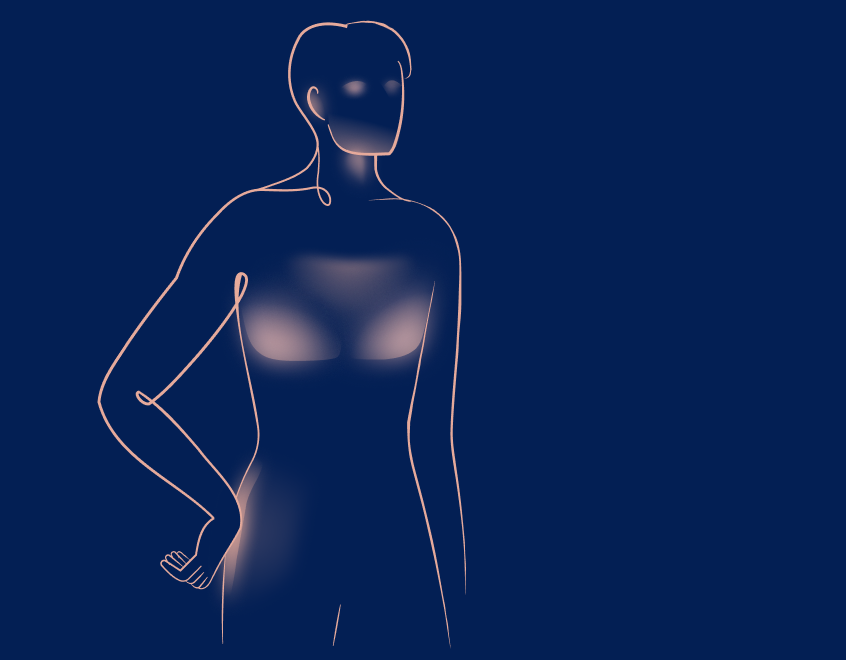
Aesthetic Surgery
Breast Surgery

- 12 breast implant procedures
Gender-Affirming Procedures
- 4 chest masculinization surgeries
- 3 laryngeal prominence reductions (first assistant)
- 2 Brazilian Butt Lift procedures
- 3 facial feminization surgeries (first assistant)
Head and Neck Procedures
- 12 blepharoplasties
- 5 otoplasties
- 9 cervico-facial lifts (first assistant)
i. deep-plane facelift
ii. SMAS plicature facelift
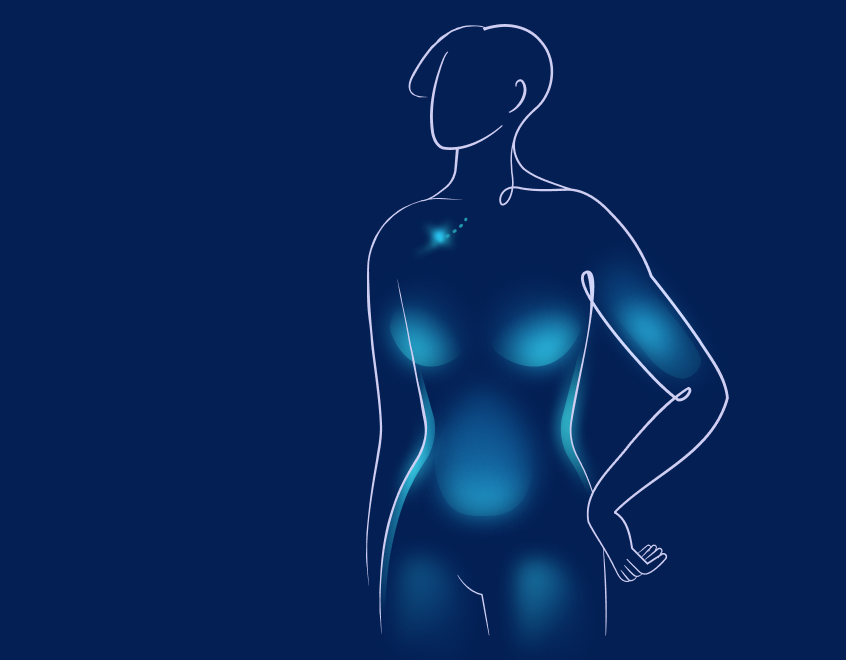
Reconstructive Surgery
Cutaneous & Minor Surgery
- 180 excisions of benign and malignant skin tumors
- 100 cyst removals (including scalp lesions)
- 40 lipoma excisions
- 26 melanoma re-excisions
- 40 scar revisions
- 16 local flap reconstructions
- 10 minor hand surgeries
Breast Surgery
- 84 breast reductions
- 48 post-mastectomy reconstructions using lipofilling
- 101 breast lipofilling procedures
- 20 prosthetic breast reconstructions
- 26 sentinel lymph node biopsies
Body Contouring & Post-Bariatric Surgery
- 27 abdominoplasties
- 15 thigh lifts
- 9 arm lifts

Aesthetic Medicine
Botulinum toxin type A

Hyaluronic acid fillers
Skin quality and regenerative protocols
- Polynucleotides - purified salmon-derived DNA
- Medical chemical peels - exfoliation and transdermal biorevitalization
- Polyrevitalizing complex - non-cross-linked HA combined with other skin nutrients
- Hybrid cooperative HA complexes - tissue bio-remodeling
- Poly-L-lactic acid biostimulator - collagen stimulator
Laser resurfacing and medical laser treatments
- CO2 - skin resurfacing, scar revision, and deep dermal remodeling
- Nd:YAG (1064 nm) - vascular lesions, deep dermal heating, and pigment management
- Er:YAG (2940 nm) - skin rejuvenation & precision epidermal ablation
- Fractional Microneedling Radiofrequency (RF) - Subdermal adipose remodeling and skin tightening
- Dual-wavelength Er:YAG & Nd:YAG Laser platform - non-ablative tightening, resurfacing, and intraoral/perioral rejuvenation
- Picosecond Nd:YAG Laser (1064/532 nm) - photoacoustic pigment fragmentation and tattoo/melasma treatment
- Cryolipolysis - Controlled cooling for localized fat reduction
- Interstitial Diode Laser (1470 nm) - minimally invasive fiber-optic lipolysis and skin retraction
- Near-Infrared (IR) thermolifting & hydro-exfoliation - deep dermal collagen contraction via water-filtered infrared light
- Non-ablative Fractional Diode Laser (1470 nm) - sub-surface thermal micro-columns for texture and tone improvement
Clinical Medicine & Emergency Care
Ongoing practice in acute medical environments ensuring safety-driven decision making during life-threatening conditions — including acute myocardial infarctions, strokes, sepsis, respiratory crises, severe allergic reactions, and trauma.

Google Reviews
Patients’ experiences often reflect more than any description - they offer a genuine insight into Dr Uderzo's philosophy, his approach, and the way he cares.
Dr Stefano is very, very attentive and very precise in his technique. Everything he does, he does with the utmost care and ensuring you are beyond satisfied with the result the whole way through the process. Would recommend 10/10.
Very welcoming and puts you at ease. Clear description of the intervention to come and the next steps. Overall excellent interaction!
The doctor is kind, professional, and friendly, and has a smile. I went to the emergency room for a wasp sting. Very satisfied.
Frequently Asked Questions
Because being informed the right way leads to more authentic results.
Search for relevant FAQs
Diluted calcium hydroxylapatite and "biostimulation": does it work for loose skin?

When diluted with saline, calcium hydroxylapatite loses its volumising effect and becomes a biostimulator: injected under the skin in a diffuse pattern, it stimulates collagen and elastin. In a pilot study of 20 patients treated on the neck and décolletage, biopsies showed a significant increase in type I collagen at four and seven months, with improvements in elasticity and dermal thickness measured with instruments. International consensus guidelines describe its use on the face, neck, décolletage, arms, abdomen, thighs and buttocks. To be clear, this is an "off-label" use, not covered by the official indications, and the evidence is still preliminary. It works on skin quality, not on excess skin.
Sources: Yutskovskaya YA, Kogan EA. Journal of Drugs in Dermatology, 2017 — PubMed 28095536; Goldie K et al. Dermatologic Surgery, 2018 — doi:10.1097/DSS.0000000000001685
What is calcium hydroxylapatite? Can it be dissolved?
Calcium hydroxylapatite is a mineral similar to that of bones and teeth, in the form of microspheres suspended in a gel. It works in two ways: the gel gives immediate volume, while the microspheres stimulate collagen production over time. It suits deep folds, facial contours and the backs of the hands. Its safety profile is good: in a review of 21 studies covering 5,081 treatments, side effects occurred in 3% of cases, almost all lumps, mostly invisible and resolving on their own. Unlike hyaluronic acid, though, it cannot be dissolved with hyaluronidase: sodium thiosulfate dissolved it in a laboratory study, but it is not yet a validated antidote. That is why it is not used in high-risk areas such as the lips and nose.
Sources: Kadouch JA. Journal of Cosmetic Dermatology, 2017 — doi:10.1111/jocd.12326; Robinson DM. Dermatologic Surgery, 2018 — doi:10.1097/DSS.0000000000001683
Can poly-L-lactic acid be used on the body (buttocks, décolletage, arms, thighs)?
Yes, and it is one of the areas where its use has grown most. Recommendations from an expert group published in the Journal of Drugs in Dermatology describe patient selection, product preparation and technique for the neck, décolletage, arms, abdomen, buttocks and thighs, with the aim of improving skin laxity and quality rather than adding volume. The same authors stress that further studies are needed to define effectiveness and duration on the body. In practice: useful for skin that has lost tone, but not an alternative to surgery when there is excess skin, nor a substitute for fat transfer when the goal is to add volume.
Source: Haddad A et al. Journal of Drugs in Dermatology, 2019 — PubMed 31524350
Can poly-L-lactic acid cause lumps? What is the "rule of 5"?
It is its best-known side effect, but there are two kinds. Small palpable lumps or papules appearing weeks after injection are usually invisible, symptom-free and tend to resolve on their own; they mostly result from suboptimal product preparation or placement and are reduced with correct technique (proper dilution, injection at the right depth). True inflammatory granulomas are very rare, with an estimated frequency of 0.01% to 0.1%, and can appear months or even years later. The massage recommended in the following days — the so-called "rule of 5": five minutes, five times a day, for five days — helps spread the product evenly.
Source: Vleggaar D, Fitzgerald R, Lorenc ZP. Journal of Drugs in Dermatology, 2014 — PubMed 24719076
Poly-L-lactic acid or hyaluronic acid filler: which is better?
They are not alternatives: they answer different problems. Hyaluronic acid gives an immediate, precise and reversible result and is the tool for defining a contour, supporting a point or correcting a groove. Poly-L-lactic acid works gradually by stimulating collagen: it suits diffuse volume loss and improving tissue firmness, with an effect that develops and lasts over time but cannot be "dissolved". Many treatment plans use both: the biostimulator to rebuild the foundation, hyaluronic acid for the details. The choice depends on the diagnosis, the quality of the tissues and expectations, not on the most fashionable product.
Source: Vleggaar D, Fitzgerald R, Lorenc ZP. Journal of Drugs in Dermatology, 2014 — PubMed 24719074
How many poly-L-lactic acid sessions do I need and how long does it last?
Usually one to three or four sessions are needed, a few weeks apart, depending on the degree of volume loss. The result builds slowly and is fully visible after a few months. Longevity is one of its strengths: in a randomised multicentre trial of 233 patients, PLLA corrected nasolabial folds with an effect documented up to 25 months after the last treatment, better than the collagen used for comparison. Individual duration still depends on age, lifestyle and the quality of the tissues at the start. Precisely because the effect is gradual, PLLA is not the right choice for someone who wants a visible result for an event next week.
Source: Narins RS et al. Journal of the American Academy of Dermatology, 2010 — doi:10.1016/j.jaad.2009.07.040
What is poly-L-lactic acid and how does it work?
Poly-L-lactic acid (PLLA) is a biocompatible, absorbable polymer that has been used for decades in various medical devices. It is not a filler in the strict sense: it does not fill immediately, it stimulates. Its microparticles trigger a controlled, "subclinical" inflammatory response that prompts fibroblasts to produce new collagen; over time the PLLA breaks down and the tissue made by your own body remains. The result therefore appears gradually, over weeks and months, and restores volume and firmness in a progressive, predictable way. It is best suited to diffuse volume loss and to improving tissue firmness, less to precise, immediate corrections.
Sources: Fitzgerald R et al. Aesthetic Surgery Journal, 2018 — doi:10.1093/asj/sjy012; Vleggaar D, Fitzgerald R, Lorenc ZP. Journal of Drugs in Dermatology, 2014 — PubMed 24719074
Do fillers hurt? What should I do before and after?
Discomfort is usually modest: most fillers contain a local anaesthetic, lidocaine, which works during the injection itself. In a randomised, double-blind trial, 93% of patients found the product with lidocaine less painful than the same filler without it. Before treatment it helps to avoid, if your own doctor agrees, medicines and supplements that increase bleeding, as well as alcohol, to reduce bruising. Afterwards, swelling and small bruises for a few days are normal; most other instructions (no makeup, sauna or intense exercise for 24 hours) are precautionary. Report immediately any severe pain or skin that turns pale, purple or blotchy: these are warning signs not to ignore.
Sources: Weinkle SH et al. Journal of Cosmetic Dermatology, 2009 — doi:10.1111/j.1473-2165.2009.00451.x; Funt D, Pavicic T. Clinical, Cosmetic and Investigational Dermatology, 2013 — doi:10.2147/CCID.S50546
Can filler cause lumps, late swelling or "migration"?
It can, but these events are uncommon and almost always manageable. Early lumps are usually collections of product; late ones can be inflammatory reactions or, rarely, granulomas. "Migration" — product moving into a nearby area, for example beyond the lip border — is linked mainly to excessive volumes and overly superficial injections repeated over time. A review in the Journal of the European Academy of Dermatology and Venereology sets out the mechanism, prevention and treatment of each complication. Prevention means moderate amounts, correct depth and adequate intervals. Swelling that appears even months later should always be reported to your doctor.
Source: Chiang YZ, Pierone G, Al-Niaimi F. Journal of the European Academy of Dermatology and Venereology, 2017 — doi:10.1111/jdv.13977
Can filler be dissolved if I don't like the result?
Yes, if it is hyaluronic acid: hyaluronidase is an enzyme that breaks it down within a few hours. It is used to correct an excess, a lump or misplaced product and, above all, it is the emergency treatment for vascular complications: with repeated high-dose protocols started within two days of the event, no skin loss occurred in the cases described. This reversibility is the main reason hyaluronic acid is considered the safest filler, especially for first-time patients. Other materials, such as calcium hydroxylapatite and poly-L-lactic acid, cannot be dissolved with hyaluronidase. Before using it, the doctor also considers the possible risk of allergy to the enzyme.
Sources: Andre P, Levy PM. Journal of Cosmetic Dermatology, 2007 — doi:10.1111/j.1473-2165.2007.00332.x; DeLorenzi C. Aesthetic Surgery Journal, 2017 — doi:10.1093/asj/sjw251
Needle or cannula for fillers: which is better?
Both are valid tools: the choice depends on the area, the depth and the type of correction. A microcannula has a blunt tip, moves vessels aside instead of piercing them, and needs few entry points: in the study of 1.7 million syringes it was associated with 77.1% lower odds of vascular occlusion than a needle. A needle, on the other hand, allows millimetre precision and small deep deposits on the bone, useful for example on the cheekbones and chin. The authors themselves conclude that the most appropriate tool depends on the patient, the anatomical site and the defect being treated. Be wary of anyone who only ever uses one of the two.
Source: Alam M et al. JAMA Dermatology, 2021 — doi:10.1001/jamadermatol.2020.5102
Can filler cause blindness? How common are vascular complications?
Vascular complications are rare, but they are the most serious: if filler enters or compresses a vessel, it can block blood flow, damage the skin and, in exceptional cases, harm vision. The most robust data come from a study of 370 dermatologists and 1.7 million syringes: one occlusion every 6,410 syringes with a needle and one every 40,882 with a microcannula, with 85% of events resolving without lasting effects. The risk was 70.7% lower among those who had been injecting for more than five years. In short: experience matters, technique matters, and so does having an emergency protocol with hyaluronidase ready, since its effectiveness depends on how quickly it is used.
Sources: Alam M et al. JAMA Dermatology, 2021 — doi:10.1001/jamadermatol.2020.5102; DeLorenzi C. Aesthetic Surgery Journal, 2017 — doi:10.1093/asj/sjw251