Clinical Credentials
Taking care of 50% men and 50% women: a refined instinct for both the sharp precision of masculine aesthetics and the soft elegance of feminine beauty.
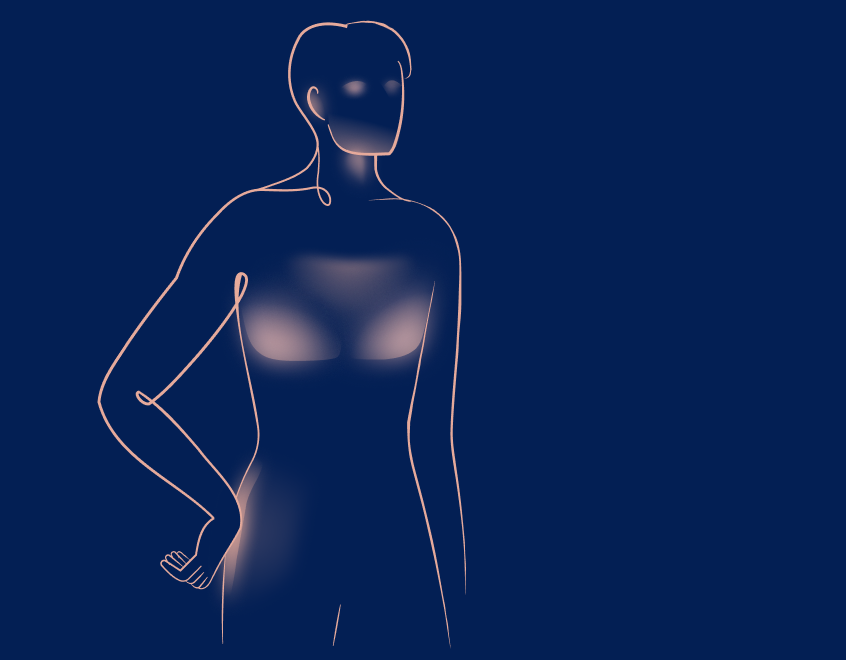
Aesthetic Surgery
Breast Surgery

- 12 breast implant procedures
Gender-Affirming Procedures
- 4 chest masculinization surgeries
- 3 laryngeal prominence reductions (first assistant)
- 2 Brazilian Butt Lift procedures
- 3 facial feminization surgeries (first assistant)
Head and Neck Procedures
- 12 blepharoplasties
- 5 otoplasties
- 9 cervico-facial lifts (first assistant)
i. deep-plane facelift
ii. SMAS plicature facelift
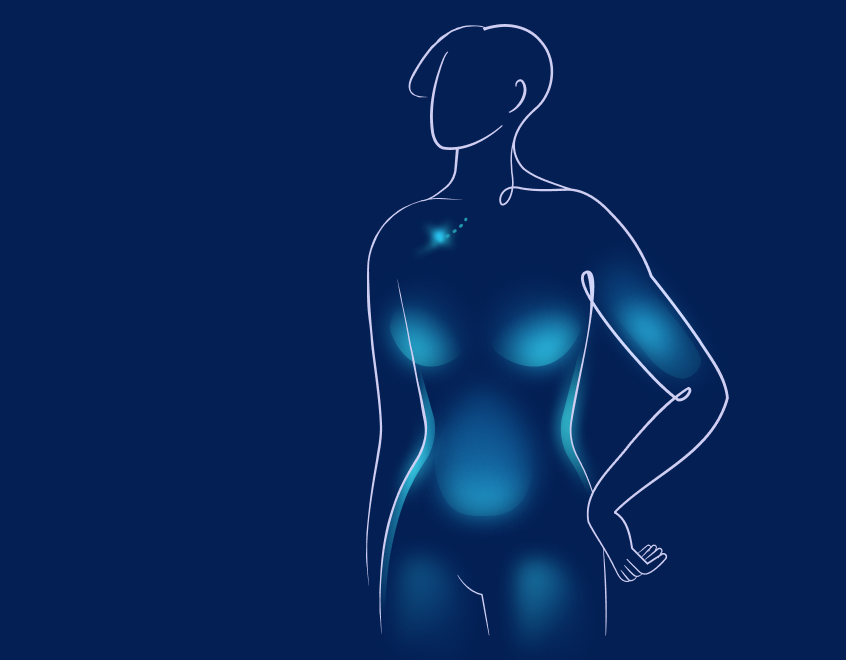
Reconstructive Surgery
Cutaneous & Minor Surgery
- 180 excisions of benign and malignant skin tumors
- 100 cyst removals (including scalp lesions)
- 40 lipoma excisions
- 26 melanoma re-excisions
- 40 scar revisions
- 16 local flap reconstructions
- 10 minor hand surgeries
Breast Surgery
- 84 breast reductions
- 48 post-mastectomy reconstructions using lipofilling
- 101 breast lipofilling procedures
- 20 prosthetic breast reconstructions
- 26 sentinel lymph node biopsies
Body Contouring & Post-Bariatric Surgery
- 27 abdominoplasties
- 15 thigh lifts
- 9 arm lifts
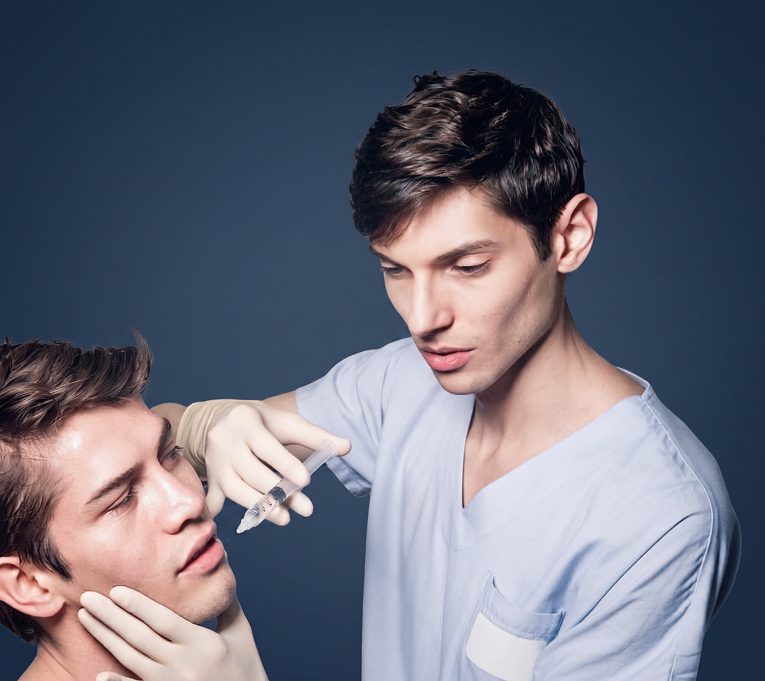
Aesthetic Medicine
Botulinum toxin type A

Hyaluronic acid fillers
Skin quality and regenerative protocols
- Polynucleotides - purified salmon-derived DNA
- Medical chemical peels - exfoliation and transdermal biorevitalization
- Polyrevitalizing complex - non-cross-linked HA combined with other skin nutrients
- Hybrid cooperative HA complexes - tissue bio-remodeling
- Poly-L-lactic acid biostimulator - collagen stimulator
Laser resurfacing and medical laser treatments
- CO2 - skin resurfacing, scar revision, and deep dermal remodeling
- Nd:YAG (1064 nm) - vascular lesions, deep dermal heating, and pigment management
- Er:YAG (2940 nm) - skin rejuvenation & precision epidermal ablation
- Fractional Microneedling Radiofrequency (RF) - Subdermal adipose remodeling and skin tightening
- Dual-wavelength Er:YAG & Nd:YAG Laser platform - non-ablative tightening, resurfacing, and intraoral/perioral rejuvenation
- Picosecond Nd:YAG Laser (1064/532 nm) - photoacoustic pigment fragmentation and tattoo/melasma treatment
- Cryolipolysis - Controlled cooling for localized fat reduction
- Interstitial Diode Laser (1470 nm) - minimally invasive fiber-optic lipolysis and skin retraction
- Near-Infrared (IR) thermolifting & hydro-exfoliation - deep dermal collagen contraction via water-filtered infrared light
- Non-ablative Fractional Diode Laser (1470 nm) - sub-surface thermal micro-columns for texture and tone improvement
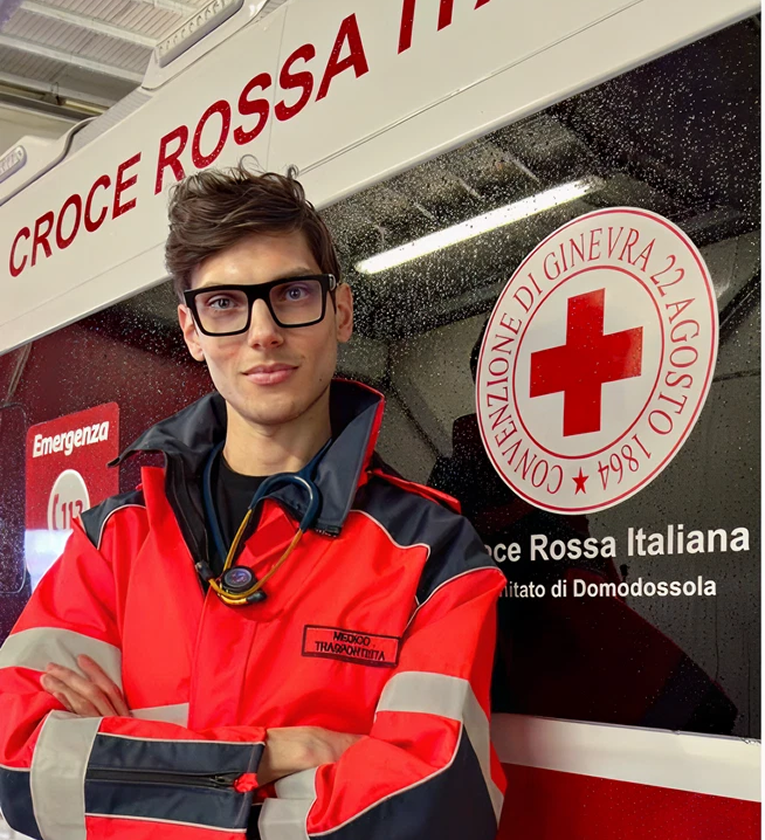
Clinical Medicine & Emergency Care
Ongoing practice in acute medical environments ensuring safety-driven decision making during life-threatening conditions — including acute myocardial infarctions, strokes, sepsis, respiratory crises, severe allergic reactions, and trauma.
Google Reviews
Patients’ experiences often reflect more than any description - they offer a genuine insight into Dr Uderzo's philosophy, his approach, and the way he cares.
Dr Stefano is very, very attentive and very precise in his technique. Everything he does, he does with the utmost care and ensuring you are beyond satisfied with the result the whole way through the process. Would recommend 10/10.
Very welcoming and puts you at ease. Clear description of the intervention to come and the next steps. Overall excellent interaction!
The doctor is kind, professional, and friendly, and has a smile. I went to the emergency room for a wasp sting. Very satisfied.
Frequently Asked Questions
Because being informed the right way leads to more authentic results.
Search for relevant FAQs
Can scars be removed? How can they be improved?

A scar cannot be erased, but it can be improved a great deal. International recommendations on scar management state that in recent years lasers have moved from emerging technology to first-line treatment; for hypertrophic scars and keloids, steroid injections, also combined with 5-fluorouracil, have an established role, and in general the best results come from combining several tools. Silicone gel or sheeting, pressure and sun protection are the basis of prevention in the first months. When a scar is wide, contracted or poorly positioned, surgical scar revision, including small local flaps, can reorient it and make it thinner and less visible.
Source: Gold MH et al. Dermatologic Surgery, 2014 — doi:10.1111/dsu.0000000000000049
Otoplasty (ear pinning): at what age, and what are the risks?
Otoplasty corrects prominent ears (protruding ears) by recreating the natural folds of the ear and reducing an excessive bowl (concha), through incisions hidden behind the ear. It can be done in children, usually from school age, when the ear has almost reached adult size, but also in adults, often under local anaesthesia. Early complications such as haematoma and infection are rare: a review of 20 studies reported rates between 0 and 8.4%. Late ones — asymmetry, partial recurrence, stitches working their way out — vary more and depend heavily on technique and length of follow-up. A headband is worn for a few weeks, mainly at night, to protect the result.
Source: Limandjaja GC et al. Journal of Plastic, Reconstructive & Aesthetic Surgery, 2009 — doi:10.1016/j.bjps.2008.06.043
"Fat stem cells": science or marketing?
Both, and it is worth telling them apart. It is a scientific fact that fat tissue contains mesenchymal stem cells: Patricia Zuk's group at UCLA showed this in 2001, demonstrating that cells obtained from liposuction fat can develop into bone, cartilage, muscle and fat. It is also a clinical fact that grafted fat has regenerative effects on skin and damaged tissue. It is marketing, however, to talk about a "stem cell facelift" as if isolated cells multiplied in a laboratory were being injected: in Europe, cultured cells are classed as advanced therapy medicinal products and are strictly regulated. Fat transfer uses whole fat, with its cells just as they are.
Source: Zuk PA et al. Tissue Engineering, 2001 — doi:10.1089/107632701300062859
How do I prepare for fat transfer and what is the recovery like?
Fat transfer is performed under local anaesthesia with sedation or under general anaesthesia, depending on the amounts and areas. Fat is harvested with thin cannulas, purified — often by centrifugation — and re-injected in small, evenly distributed amounts through thin cannulas: these are the technical details that a review from the University of Parma associates with better fat survival. After surgery, the donor area feels sore as after liposuction and needs a compression garment; the treated area stays swollen for a few weeks. Complications are generally minor: bruising, swelling, rare infections, small areas of fat necrosis or calcification.
Source: Simonacci F et al. Annals of Medicine and Surgery, 2017 — doi:10.1016/j.amsu.2017.06.059
Is a Brazilian Butt Lift (BBL) dangerous?
For years the BBL had the highest mortality of any cosmetic operation, because of fat embolism: fat accidentally injected into the gluteal muscle can enter the large deep veins. In 2017 an international task force, analysing nearly 200,000 procedures, issued new recommendations, and mortality has fallen sharply. It nevertheless remains an operation to be performed only by experienced hands.
Sources: Mofid MM et al. Aesthetic Surgery Journal, 2017 — doi:10.1093/asj/sjx004; Rios L, Gupta V. Aesthetic Surgery Journal, 2020 — doi:10.1093/asj/sjaa098
Can fat transfer repair scars and tissues damaged by radiotherapy?
Yes, and it is perhaps the most fascinating discovery linked to fat grafting. In 2007 Italian plastic surgeon Gino Rigotti, in Verona, treated 20 patients with severe or irreversible radiotherapy damage with repeated fat injections: all showed improvement or remission of symptoms, and tissue analysis documented new blood vessels and better hydration. The mechanism was attributed to the stem cells and regenerative factors present in fat. Since then, fat transfer has also been used for contracted or painful scars, burn scars and adhesions after surgery. This is why it is not just a "filler" but a tool of regenerative medicine.
Source: Rigotti G et al. Plastic and Reconstructive Surgery, 2007 — doi:10.1097/01.prs.0000256047.47909.71
Is fat transfer safe after breast cancer?
It is one of the most important questions, and today the data are reassuring. Fat transfer is widely used to correct defects after lumpectomy or mastectomy and to improve implant-based reconstruction. A Dutch study published in JAMA Surgery compared 287 patients treated with fat transfer and 300 matched patients who were not, with a mean follow-up of more than 8 years: it found no increase in local recurrence, distant metastasis or cancer-related death. It should still be performed in coordination with the oncology team, with regular imaging. Breast reconstruction with fat transfer has been a central part of my specialist training.
Source: Krastev T et al. JAMA Surgery, 2019 — doi:10.1001/jamasurg.2018.3744
Fat transfer to the breast: can breasts be enlarged without implants?
Yes, for moderate increases and in women with enough fat to harvest. Fat transfer can increase volume, improve shape and asymmetry, and correct defects after implants or cancer surgery, with a result that feels soft and natural. In the systematic review of 22 studies involving 3,565 patients, average volume retention was 62%, patient satisfaction 92%, and radiological findings, such as small calcifications, were comparable to those seen after implant augmentation. The limits: it does not give the projection of an implant, more sessions are sometimes needed and, as for every woman, regular breast screening is required. The authors call for longer studies on cancer detection.
Source: Groen JW et al. Aesthetic Surgery Journal, 2016 — doi:10.1093/asj/sjw105
What are microfat and nanofat? Can they improve the skin?
Microfat and nanofat are progressively finer fat preparations. Microfat, harvested with thin cannulas, can be injected even into delicate areas such as the eyelids, lips and superficial folds. Nanofat is obtained by emulsifying and filtering fat: it no longer contains living fat cells, but it retains adipose-derived stem cells and regenerative factors. It does not add volume, but it works on skin quality: in the original study by Patrick Tonnard's group of 67 cases, it improved fine lines, scars and dark under-eye circles, with visible benefits at six months. An Italian study of 21 patients with sun-damaged skin measured, with digital profilometry, a 41% reduction in average wrinkle depth 90 days after microfat.
Sources: Tonnard P et al. Plastic and Reconstructive Surgery, 2013 — doi:10.1097/PRS.0b013e31829fe1b0; Trivisonno A et al. Journal of Plastic, Reconstructive & Aesthetic Surgery, 2017 — doi:10.1016/j.bjps.2017.04.002
How much transferred fat "takes"? Is the result permanent?
Part of the injected fat is reabsorbed in the first months, while the part that survives becomes stable tissue and behaves like the rest of your body fat. A systematic review of 22 studies involving 3,565 patients who had breast fat transfer estimated average volume retention of 62.4%, ranging from 44.7% to 82.6% depending on technique and patient. This is why two sessions are sometimes needed to reach the goal. After a few months the remaining volume is considered stable. Being living fat tissue, it follows changes in weight: it grows if you gain weight and shrinks if you lose it. That is why it is important to come to surgery at a stable weight.
Source: Groen JW et al. Aesthetic Surgery Journal, 2016 — doi:10.1093/asj/sjw105
What is fat transfer (fat grafting, lipofilling) and how does it work?
Fat transfer, also called fat grafting or lipofilling, means harvesting fat from your own body — usually the abdomen, flanks or thighs — with gentle liposuction, purifying it and re-injecting it in small amounts where volume or regeneration is needed. Because it is your own tissue, it does not cause foreign-body reactions. The modern technique owes much to Sydney Coleman, who standardised harvesting, purification and micro-injection. In his 2006 paper in Plastic and Reconstructive Surgery he called it "more than a permanent filler": besides restoring volume, grafted fat improves the quality of the surrounding skin, of scars and of tissues damaged by radiotherapy. The result, however, depends heavily on the technique of the person performing it.
Source: Coleman SR. Plastic and Reconstructive Surgery, 2006 — doi:10.1097/01.prs.0000234610.81672.e7
How long does a facelift last? When is the right time?
A facelift does not stop the clock, it turns it back: ageing continues, but from a younger starting point. Techniques that work on the deep tissues give more stable results than those that only tighten the skin. In 25 years of experience with 1,089 patients, Rohrich and Narasimhan observed better long-term results in younger patients with fuller faces, more relapse in heavier necks, and a benefit from treating neck bands, from skin resurfacing and from topical retinoids. The same authors acknowledge that follow-up beyond three years is hard to document. The right time is not an age but an anatomy: when volume and devices are no longer enough.
Source: Rohrich RJ, Narasimhan K. Plastic and Reconstructive Surgery, 2016 — doi:10.1097/PRS.0000000000002318