Clinical Credentials
Taking care of 50% men and 50% women: a refined instinct for both the sharp precision of masculine aesthetics and the soft elegance of feminine beauty.
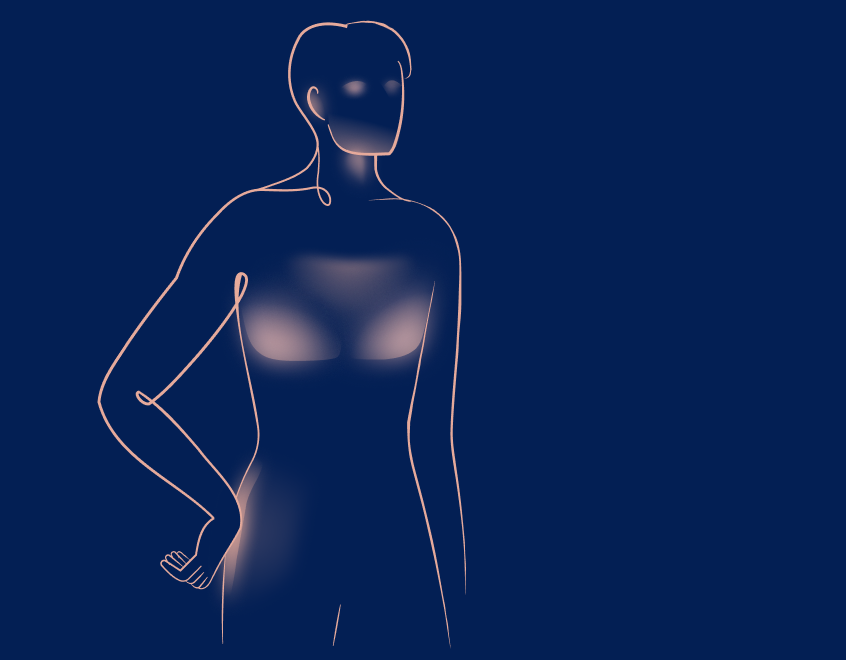
Aesthetic Surgery
Breast Surgery

- 12 breast implant procedures
Gender-Affirming Procedures
- 4 chest masculinization surgeries
- 3 laryngeal prominence reductions (first assistant)
- 2 Brazilian Butt Lift procedures
- 3 facial feminization surgeries (first assistant)
Head and Neck Procedures
- 12 blepharoplasties
- 5 otoplasties
- 9 cervico-facial lifts (first assistant)
i. deep-plane facelift
ii. SMAS plicature facelift
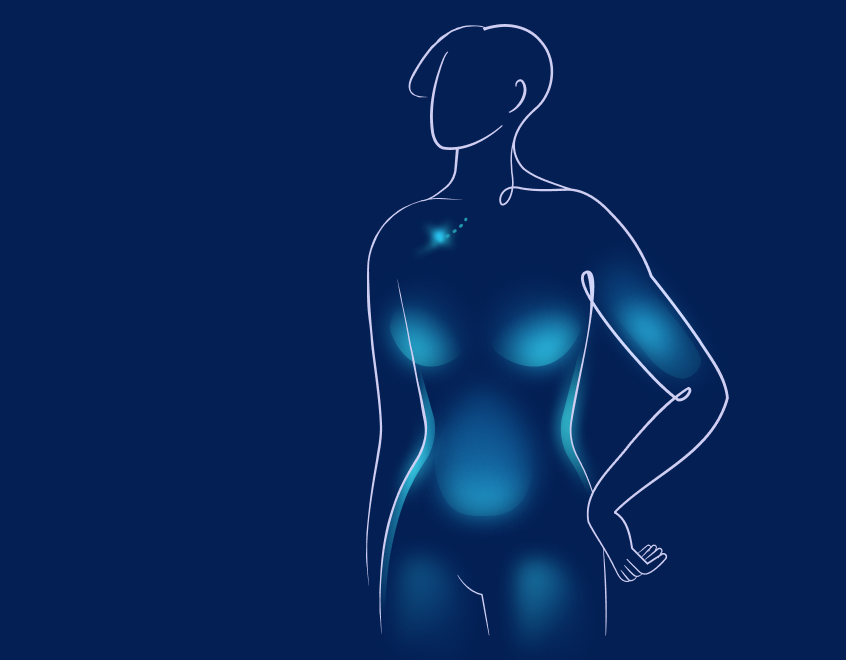
Reconstructive Surgery
Cutaneous & Minor Surgery
- 180 excisions of benign and malignant skin tumors
- 100 cyst removals (including scalp lesions)
- 40 lipoma excisions
- 26 melanoma re-excisions
- 40 scar revisions
- 16 local flap reconstructions
- 10 minor hand surgeries
Breast Surgery
- 84 breast reductions
- 48 post-mastectomy reconstructions using lipofilling
- 101 breast lipofilling procedures
- 20 prosthetic breast reconstructions
- 26 sentinel lymph node biopsies
Body Contouring & Post-Bariatric Surgery
- 27 abdominoplasties
- 15 thigh lifts
- 9 arm lifts

Aesthetic Medicine
Botulinum toxin type A

Hyaluronic acid fillers
Skin quality and regenerative protocols
- Polynucleotides - purified salmon-derived DNA
- Medical chemical peels - exfoliation and transdermal biorevitalization
- Polyrevitalizing complex - non-cross-linked HA combined with other skin nutrients
- Hybrid cooperative HA complexes - tissue bio-remodeling
- Poly-L-lactic acid biostimulator - collagen stimulator
Laser resurfacing and medical laser treatments
- CO2 - skin resurfacing, scar revision, and deep dermal remodeling
- Nd:YAG (1064 nm) - vascular lesions, deep dermal heating, and pigment management
- Er:YAG (2940 nm) - skin rejuvenation & precision epidermal ablation
- Fractional Microneedling Radiofrequency (RF) - Subdermal adipose remodeling and skin tightening
- Dual-wavelength Er:YAG & Nd:YAG Laser platform - non-ablative tightening, resurfacing, and intraoral/perioral rejuvenation
- Picosecond Nd:YAG Laser (1064/532 nm) - photoacoustic pigment fragmentation and tattoo/melasma treatment
- Cryolipolysis - Controlled cooling for localized fat reduction
- Interstitial Diode Laser (1470 nm) - minimally invasive fiber-optic lipolysis and skin retraction
- Near-Infrared (IR) thermolifting & hydro-exfoliation - deep dermal collagen contraction via water-filtered infrared light
- Non-ablative Fractional Diode Laser (1470 nm) - sub-surface thermal micro-columns for texture and tone improvement
Clinical Medicine & Emergency Care
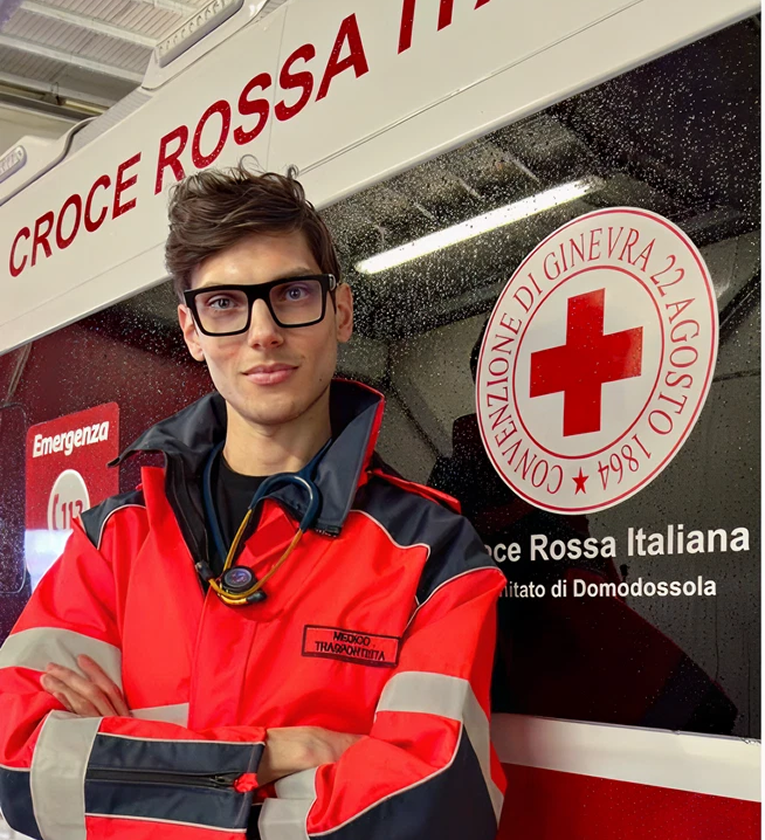
Ongoing practice in acute medical environments ensuring safety-driven decision making during life-threatening conditions — including acute myocardial infarctions, strokes, sepsis, respiratory crises, severe allergic reactions, and trauma.
Google Reviews
Patients’ experiences often reflect more than any description - they offer a genuine insight into Dr Uderzo's philosophy, his approach, and the way he cares.
Dr Stefano is very, very attentive and very precise in his technique. Everything he does, he does with the utmost care and ensuring you are beyond satisfied with the result the whole way through the process. Would recommend 10/10.
Very welcoming and puts you at ease. Clear description of the intervention to come and the next steps. Overall excellent interaction!
The doctor is kind, professional, and friendly, and has a smile. I went to the emergency room for a wasp sting. Very satisfied.
Frequently Asked Questions
Because being informed the right way leads to more authentic results.
Search for relevant FAQs
Is a non-surgical nose job (liquid rhinoplasty) safe?

A non-surgical nose job can correct small bumps, dips or asymmetries without surgery, but it is one of the highest-risk injectable procedures. The arteries of the nose connect with those of the eye: an accidental injection into a vessel can damage the skin and, rarely, cause loss of vision. In a review of the world literature on cases of filler-related visual loss published between 2015 and 2018, the nose was the most frequent site (56.3% of cases). This does not mean it should never be done, but that it requires in-depth anatomical knowledge, absorbable and reversible products, low pressure and small volumes. It does not reduce a large nose or fix breathing problems: for those, surgical rhinoplasty is needed.
Source: Beleznay K et al. Aesthetic Surgery Journal, 2019 — doi:10.1093/asj/sjz053
Can filler define the cheekbones, chin and jawline?
Yes: it is one of the most effective uses of hyaluronic acid. In these areas a firm gel placed deep, close to the bone, supports the tissues and reshapes the profile with relatively small volumes. Well-supported cheekbones, for example, can also improve the tear trough and the nasolabial folds. The MD Codes method set out, for each anatomical sub-unit, the depth, the tool (needle or cannula), the technique and the minimum effective volume, aiming to improve the overall expression rather than a single detail. The limit is proportion: defining does not mean transforming. The chin and jawline must be planned in relation to the nose, lips and neck, and in men the goal differs from that in women.
Source: de Maio M. Aesthetic Plastic Surgery, 2021 — doi:10.1007/s00266-020-01762-7
Can under-eye hollows (tear troughs) be treated with filler?
Yes, in selected patients. The tear trough is the groove between the lower eyelid and the cheek that gives a tired look. When it is caused by volume loss and the skin is of good quality, a suitable hyaluronic acid filler placed deep can correct it effectively and with high satisfaction. It is, however, one of the most delicate areas: thin skin, a risk of persistent swelling or a bluish tint if the product is too superficial. It does not work — and can make things look worse — when dark circles are due to prominent fat bags, excess skin or dark pigmentation: in those cases the answer is surgical (blepharoplasty) or dermatological. Patient selection is half of the result.
Source: Hirmand H. Plastic and Reconstructive Surgery, 2010 — doi:10.1097/PRS.0b013e3181c82f90
Lip filler: how do you get a natural and safe result?
Natural lips respect the proportions of the face — the lower lip is usually fuller than the upper — as well as the shape of the border and movement. Rather than "adding volume", the job is often to hydrate, redefine the outline or correct an asymmetry with minimal amounts. Safety depends on anatomy: a study of 193 anatomical specimens showed that the labial arteries almost always run deep, between the inner lining and the muscle (78.1% of cases), but can also lie closer to the surface, especially in the centre of the lip, the most variable area. This is why injection depth and points must be chosen with anatomical precision. "Duck lips" almost never come from a single session: they are the result of build-up over time.
Source: Cotofana S et al. Plastic and Reconstructive Surgery, 2017 — doi:10.1097/PRS.0000000000003244
How long do hyaluronic acid fillers last?
It depends on the product, the area and your metabolism: the visible result usually lasts 6 to 18 months, longer in areas with little movement such as the cheekbones and chin, shorter in the lips. But "visible result" does not mean the gel has gone: imaging and biopsies have documented hyaluronic acid still present in the tissues up to 9 years after injection around the eyes. This has two practical consequences. First, top-ups should be decided by looking at the face, not the calendar, to avoid build-up. Second, anyone who has had filler should tell their doctor even years later, because residual product can affect new treatments or surgery.
Source: Chang JR et al. Ophthalmic Plastic and Reconstructive Surgery, 2017 — doi:10.1097/IOP.0000000000000434
What is a hyaluronic acid filler and how does it work?
Hyaluronic acid is a molecule naturally present in the skin, able to bind water. In fillers it is stabilised with chemical bonds — it is "cross-linked" — so it resists breakdown for longer, and turned into a gel that, once injected, restores volume, supports tissues or defines contours. Not all fillers are the same: each product has different rheological properties — firmness, elasticity, cohesiveness, water uptake — that determine where and how it should be used. A review by Italian authors in the International Journal of Molecular Sciences showed how widely these properties vary between brands and how poorly manufacturers describe them. This is why the product is chosen for the area and the tissue, not for the brand.
Source: Fundarò SP et al. International Journal of Molecular Sciences, 2022 — doi:10.3390/ijms231810518
Can I have botulinum toxin injections while pregnant or breastfeeding?
No: as a precaution it is not given during pregnancy or breastfeeding, because there are no controlled studies proving it is safe at these times. To reassure anyone treated before knowing they were pregnant, the available pharmacovigilance data are encouraging: in a 24-year analysis of the manufacturer's safety database, among 232 exposed pregnancies with a known outcome, the rate of birth defects in prospectively followed babies was 2.7%, comparable to the general population. These are spontaneous reports, though, not proof of safety. After accidental exposure, the right step is to tell your obstetrician, without alarm. Treatments can resume once breastfeeding has ended.
Source: Brin MF et al. Pharmacoepidemiology and Drug Safety, 2016 — doi:10.1002/pds.3920
What are the possible side effects of botulinum toxin?
The most common are mild and temporary: small bruises or redness at injection points, a passing headache, a feeling of heaviness in the forehead for the first few days. The most feared is ptosis, a drooping eyelid or brow: in the systematic review of 35 studies it occurred in 2.5% of cases for the eyelid and 3.1% for the brow, resolving on its own in every case; in the Italian multicentre study of over 5,000 patients, which I co-authored, no eyelid ptosis was observed. The risk depends mainly on anatomy, dose and accuracy of the injection point. If it does occur, it fades within a few weeks, and your doctor can suggest ways to make it less noticeable.
Sources: Cavallini M et al. Dermatologic Surgery, 2014 — doi:10.1111/dsu.12463; Santorelli A, …, Uderzo S. Toxins, 2025 — doi:10.3390/toxins17080372
Can you become resistant to botulinum toxin?
It is rare, but possible. In some people the body produces neutralising antibodies that reduce or cancel the effect. A review in Toxins identified the factors that raise this risk: short intervals between injections, top-ups shortly after treatment, high doses per cycle and a larger amount of protein injected. More purified formulations, free of accessory proteins, may have lower immunogenicity. Prevention is simple: keep intervals of at least three months, avoid frequent top-ups and use the lowest effective dose. If a treatment that used to work stops working, it should be assessed by your doctor rather than simply increasing the dose.
Source: Bellows S, Jankovic J. Toxins, 2019 — doi:10.3390/toxins11090491
Does botulinum toxin help with teeth grinding (bruxism) and slimming the face (masseter)?
These are two different questions with different answers. For reducing the bulk of the masseter muscles and slimming the lower face, the effect is well documented: in a study of 220 cases treated with tailored doses, masseter thickness fell from 12.9 to 8.7 mm at three months, with 95.9% satisfaction. For bruxism and jaw-joint pain, the evidence is weaker: a 2024 meta-analysis of 14 randomised trials found no significant difference from placebo on pain or bruxism episodes. In short: an excellent cosmetic tool for a square jaw, uncertain results as a treatment for grinding, which should first be assessed by a dentist or jaw specialist.
Sources: Xie Y et al. Plastic and Reconstructive Surgery, 2014 — doi:10.1097/PRS.0000000000000371; Saini RS et al. PLoS One, 2024 — doi:10.1371/journal.pone.0300157
Does botulinum toxin work for excessive sweating (hyperhidrosis)?
Yes, and it is one of the best-documented indications. In a randomised, double-blind trial published in the BMJ of 320 patients with primary underarm hyperhidrosis, at four weeks 94% of those who received the toxin had reduced sweating by at least half, compared with 36% in the placebo group; at 16 weeks the response was still 82% versus 21%. Treatment consists of small injections into the skin of the sweating area, mapped with a starch-iodine test. The effect lasts several months and needs repeating. Hyperhidrosis should still be assessed by a doctor first: in some cases it is secondary to other conditions that need to be ruled out before treatment.
Source: Naumann M, Lowe NJ. BMJ, 2001 — doi:10.1136/bmj.323.7313.596
Which areas can botulinum toxin treat besides the forehead? What is the "Nefertiti lift"?
Approved cosmetic indications mainly cover upper-face lines — frown lines, forehead lines, crow's feet — with differences between products. In clinical practice the toxin is also used, often off-label, for bunny lines on the nose, a gummy smile, downturned mouth corners, a dimpled "orange-peel" chin, neck bands and the jawline. The "Nefertiti lift", described in 2007 in 130 patients, targets the platysma muscle with doses of up to 20 units to redefine the jawline. In the lower face, however, muscles sit close together and are used to speak and smile: in the systematic safety review, lip asymmetries occurred in 6.9% of treatments. Conservative doses and precise technique are essential.
Sources: Levy PM. Journal of Cosmetic and Laser Therapy, 2007 — doi:10.1080/14764170701545657; Cavallini M et al. Dermatologic Surgery, 2014 — doi:10.1111/dsu.12463