Clinical Credentials
Taking care of 50% men and 50% women: a refined instinct for both the sharp precision of masculine aesthetics and the soft elegance of feminine beauty.
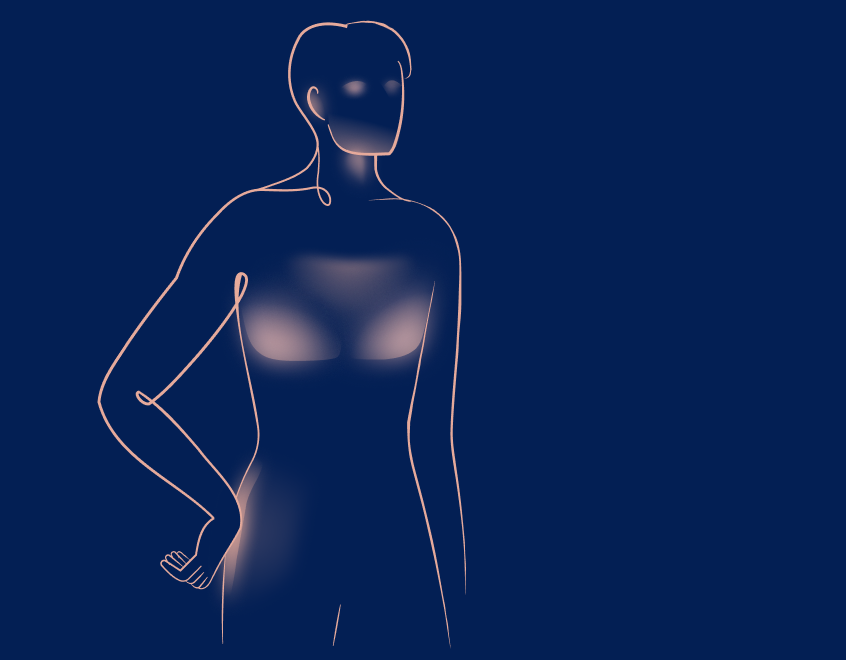
Aesthetic Surgery
Breast Surgery

- 12 breast implant procedures
Gender-Affirming Procedures
- 4 chest masculinization surgeries
- 3 laryngeal prominence reductions (first assistant)
- 2 Brazilian Butt Lift procedures
- 3 facial feminization surgeries (first assistant)
Head and Neck Procedures
- 12 blepharoplasties
- 5 otoplasties
- 9 cervico-facial lifts (first assistant)
i. deep-plane facelift
ii. SMAS plicature facelift
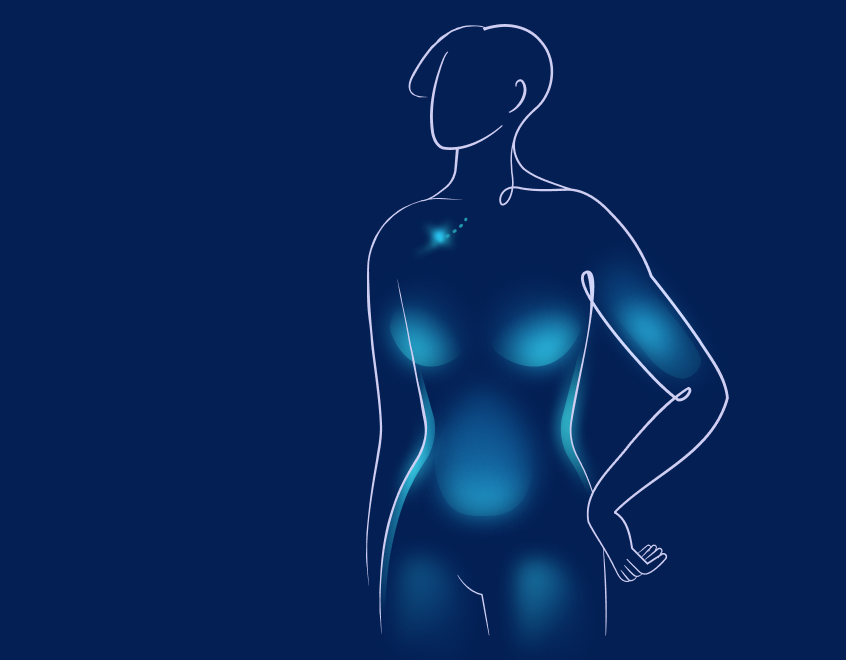
Reconstructive Surgery
Cutaneous & Minor Surgery
- 180 excisions of benign and malignant skin tumors
- 100 cyst removals (including scalp lesions)
- 40 lipoma excisions
- 26 melanoma re-excisions
- 40 scar revisions
- 16 local flap reconstructions
- 10 minor hand surgeries
Breast Surgery
- 84 breast reductions
- 48 post-mastectomy reconstructions using lipofilling
- 101 breast lipofilling procedures
- 20 prosthetic breast reconstructions
- 26 sentinel lymph node biopsies
Body Contouring & Post-Bariatric Surgery
- 27 abdominoplasties
- 15 thigh lifts
- 9 arm lifts
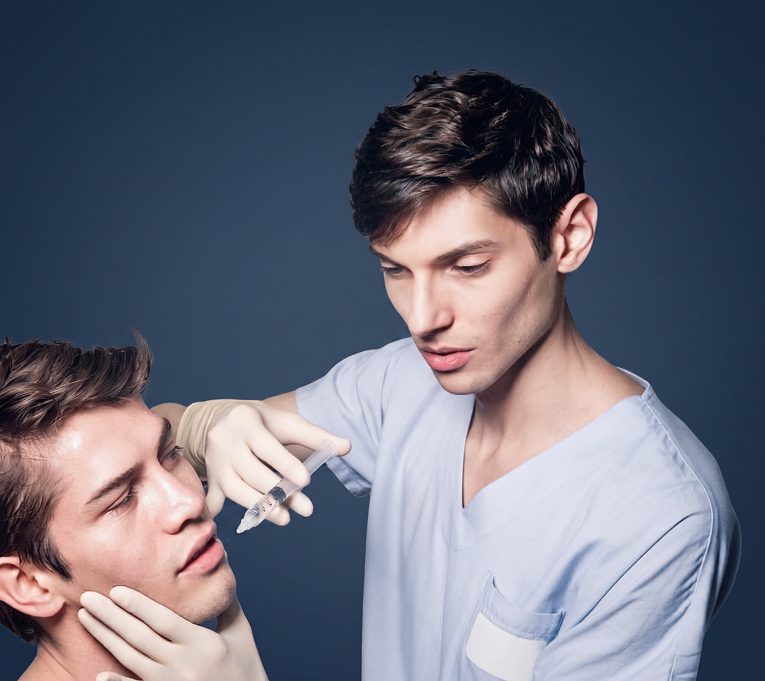
Aesthetic Medicine
Botulinum toxin type A

Hyaluronic acid fillers
Skin quality and regenerative protocols
- Polynucleotides - purified salmon-derived DNA
- Medical chemical peels - exfoliation and transdermal biorevitalization
- Polyrevitalizing complex - non-cross-linked HA combined with other skin nutrients
- Hybrid cooperative HA complexes - tissue bio-remodeling
- Poly-L-lactic acid biostimulator - collagen stimulator
Laser resurfacing and medical laser treatments
- CO2 - skin resurfacing, scar revision, and deep dermal remodeling
- Nd:YAG (1064 nm) - vascular lesions, deep dermal heating, and pigment management
- Er:YAG (2940 nm) - skin rejuvenation & precision epidermal ablation
- Fractional Microneedling Radiofrequency (RF) - Subdermal adipose remodeling and skin tightening
- Dual-wavelength Er:YAG & Nd:YAG Laser platform - non-ablative tightening, resurfacing, and intraoral/perioral rejuvenation
- Picosecond Nd:YAG Laser (1064/532 nm) - photoacoustic pigment fragmentation and tattoo/melasma treatment
- Cryolipolysis - Controlled cooling for localized fat reduction
- Interstitial Diode Laser (1470 nm) - minimally invasive fiber-optic lipolysis and skin retraction
- Near-Infrared (IR) thermolifting & hydro-exfoliation - deep dermal collagen contraction via water-filtered infrared light
- Non-ablative Fractional Diode Laser (1470 nm) - sub-surface thermal micro-columns for texture and tone improvement
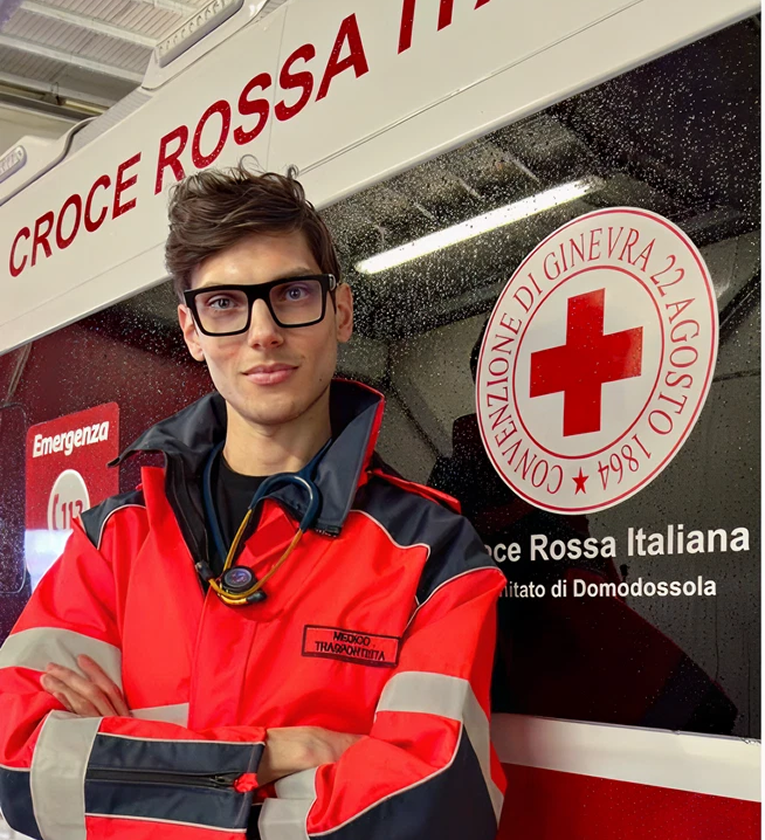
Clinical Medicine & Emergency Care
Ongoing practice in acute medical environments ensuring safety-driven decision making during life-threatening conditions — including acute myocardial infarctions, strokes, sepsis, respiratory crises, severe allergic reactions, and trauma.
Google Reviews
Patients’ experiences often reflect more than any description - they offer a genuine insight into Dr Uderzo's philosophy, his approach, and the way he cares.
Dr Stefano is very, very attentive and very precise in his technique. Everything he does, he does with the utmost care and ensuring you are beyond satisfied with the result the whole way through the process. Would recommend 10/10.
Very welcoming and puts you at ease. Clear description of the intervention to come and the next steps. Overall excellent interaction!
The doctor is kind, professional, and friendly, and has a smile. I went to the emergency room for a wasp sting. Very satisfied.
Frequently Asked Questions
Because being informed the right way leads to more authentic results.
Search for relevant FAQs
What is breast implant-associated lymphoma (BIA-ALCL)? Should I worry?

BIA-ALCL is a rare lymphoma that develops in the capsule around the implant, not in the breast tissue, and is associated mainly with macro-textured implants. The risk is real but small in absolute terms: a Dutch study based on the national pathology registry estimated a cumulative risk of 29 cases per million women with implants by age 50 and 82 per million by age 70 — one case for every 6,920 women with implants before age 75; 82% of cases involved macro-textured implants. The typical sign is sudden swelling of the breast, even years after surgery. In the reference series of 87 patients, complete removal of implant and capsule was associated with the best survival.
Sources: de Boer M et al. JAMA Oncology, 2018 — doi:10.1001/jamaoncol.2017.4510; Clemens MW et al. Journal of Clinical Oncology, 2016 — doi:10.1200/JCO.2015.63.3412
Do breast implants need replacing every 10 years?
No, there is no fixed expiry date: it is a widespread myth. Implants do not "expire", but they are not lifetime devices either, and they need monitoring over time. In the 10-year registration study of 715 patients, 81.8% of women who had breast augmentation still had their original implants; rupture, looked for with MRI, affected 7.7% of implants, and capsular contracture 18.9% of augmentation patients. 94.2% said they were satisfied. Implants are replaced when there is a reason — rupture, contracture, changes in the breast or the patient's wish — not by the calendar. This is why regular check-ups, with ultrasound or MRI as your doctor advises, matter.
Source: Spear SL, Murphy DK. Plastic and Reconstructive Surgery, 2014 — doi:10.1097/PRS.0000000000000021
Implants over or under the muscle? What is "dual plane"?
The plane in which the implant is placed affects how natural it looks, how it holds up over time and the risk of capsular contracture. Over the muscle (subglandular) the implant sits closer to the surface: it works when there is plenty of tissue, but in slim patients the edges are more visible or palpable. The "dual plane" technique, described by John Tebbetts in 2001 in 468 patients, places the upper part of the implant under the pectoral muscle, which covers it where the tissue is thinnest, and leaves the lower part against the gland for a more natural profile. The choice is based on measurements and tissue thickness.
Source: Tebbetts JB. Plastic and Reconstructive Surgery, 2001 — doi:10.1097/00006534-200104150-00027
What types of breast implants are there?
Implants differ in shape and surface. By shape: round implants spread volume evenly and project more or less depending on the profile chosen; anatomical, "teardrop" implants place more volume in the lower part and use a firmer gel; ergonomic implants use a soft gel designed to adapt their shape to body position, and are the most recent, with less long-term data. By surface: smooth, including nanotextured implants, which the ISO 14607:2018 standard classifies as smooth; microtextured, with slight roughness; and polyurethane-coated, a foam that adheres to the tissues. The choice is based on measurements, tissues and goals.
Sources: Munhoz AM, Clemens MW, Nahabedian MY. Plastic and Reconstructive Surgery Global Open, 2019 — doi:10.1097/GOX.0000000000002466; Montemurro P. Aesthetic Surgery Journal, 2024 — doi:10.1093/asj/sjae071
What are the risks of eyelid surgery?
The most frequent problems are temporary: swelling, bruising, dry or watery eyes, a feeling of tightness when closing the eyelids for a few days. Real complications are rare: asymmetry, visible scars, a malposition of the lower eyelid when too much skin is removed or eyelid tone is not properly assessed. The most serious complication is bleeding behind the eye: in a series of 269,433 operations, orbital haemorrhage occurred in 0.055% of cases (about 1 in 2,000) and permanent loss of vision in 0.0045% (about 1 in 22,000), mostly in the first few hours. High blood pressure, aspirin, vomiting and exertion after surgery were the most associated factors: this is why rest and blood-pressure control in the first 24 hours are essential.
Source: Hass AN et al. Ophthalmic Plastic and Reconstructive Surgery, 2004 — doi:10.1097/01.iop.0000143711.48389.c5
Lower eyelid surgery: are the bags removed or is the fat repositioned?
The modern trend is to preserve. Traditional lower blepharoplasty removed the fat of the bags, but over time this could leave a hollow under the eye with an "operated" look. In 1995 plastic surgeon Sam Hamra described a technique that releases the ligament at the rim of the eye socket and moves the fat forward, over the tear trough groove, instead of removing it: in 152 cases he achieved a smoother transition between eyelid and cheek. Today, depending on anatomy, surgery can be done from inside the eyelid (transconjunctival approach, with no visible scar) or through an incision just below the lashes when skin also needs removing. The choice depends on fat, skin, eyelid tone and cheek volume. There is always some variability in the indication, which rests on the surgeon's judgement.
Source: Hamra ST. Plastic and Reconstructive Surgery, 1995 — doi:10.1097/00006534-199508000-00014
How is upper eyelid surgery done and how long is the recovery?
Upper blepharoplasty is usually performed under local anaesthesia, with or without sedation. The incision follows the natural eyelid crease, so the scar is hidden when the eye is open and becomes barely visible over time. A crescent of excess skin is removed and, only if necessary, a small amount of muscle or fat (herniated fat pads): today's approach is conservative, because removing too much creates a hollow, "operated" look. Stitches usually come out after about a week; swelling and bruising settle in one to two weeks, when most people return to social life. The final result is seen after a few months, once the tissues have settled.
Source: Rohrich RJ et al. Plastic and Reconstructive Surgery, 2004 — doi:10.1097/01.prs.0000105684.06281.32
Do I need to stop smoking before surgery? How should I prepare?
Yes, and it is one of the most useful things you can do for your result. Smoking reduces oxygen in the tissues: a meta-analysis of 140 studies involving nearly 480,000 patients showed that smokers had a 3.6-fold higher risk of tissue necrosis, twice the healing and wound-opening problems and a higher risk of infection; stopping before surgery reduces wound infections. In operations involving wide undermining — facelift, tummy tuck, breast lift — tissue damage can also compromise the cosmetic result. You will usually be asked to stop smoking and nicotine in the weeks before and after surgery, as your surgeon advises. Preparing also means a stable weight, complete tests and a review of your medicines and supplements with your doctor.
Source: Sørensen LT. Archives of Surgery, 2012 — doi:10.1001/archsurg.2012.5
How do I know if my expectations are realistic? What is body dysmorphic disorder?
A good consultation is not only about choosing the technique, but about understanding whether surgery truly answers your problem. Body dysmorphic disorder — an excessive preoccupation with minor flaws or flaws others cannot see — is much more common in cosmetic surgery than in the general population: a systematic review estimates it at around 13% of cosmetic surgery patients and 20% of those requesting rhinoplasty, compared with about 2% of the general population. In these cases surgery rarely brings satisfaction and can increase distress. This is why it is normal for a surgeon to ask about motivations, timing and expectations, and sometimes to advise waiting or speaking to a specialist. It is a form of protection, not a rejection.
Source: Veale D et al. Body Image, 2016 — doi:10.1016/j.bodyim.2016.07.003
How do I choose a surgeon and a clinic? Is surgery abroad worth it?
Three concrete checks. The person operating should be a specialist in plastic, reconstructive and aesthetic surgery, something you can verify with the national medical register (in Italy, the Ordine dei Medici). The facility should be licensed, with an anaesthetist present. The pre-operative consultation should be a real one: time for questions, written informed consent and a plan for follow-up visits. Cosmetic surgery tourism tempts with prices, but it shifts the problem to "afterwards": a survey of members of the American Society of Plastic Surgeons documented complications from operations performed abroad that were then managed back home, often without medical records and with no recourse. An operation does not end in the theatre: follow-up is part of the result, and distance makes it harder.
Source: Melendez MM, Alizadeh K. Aesthetic Surgery Journal, 2011 — doi:10.1177/1090820X11415977
Does fat freezing (cryolipolysis) work? Are there risks?
Cryolipolysis cools subcutaneous fat in a controlled way; fat cells are more sensitive to cold than skin, so the affected fat cells die and are cleared gradually over a few months. The principle was demonstrated in 2008 by a Harvard group, with a progressive reduction in fat thickness without damage to the skin. It suits localised, "pinchable" fat in people close to their ideal weight; it is not a weight-loss treatment. The rare but important side effect is paradoxical adipose hyperplasia: instead of shrinking, the treated fat grows and does not resolve on its own. The first report estimated it at 0.0051%, more frequent in men; later clinical series have reported higher rates.
Sources: Manstein D et al. Lasers in Surgery and Medicine, 2008 — doi:10.1002/lsm.20719; Jalian HR et al. JAMA Dermatology, 2014 — doi:10.1001/jamadermatol.2013.8071; Kelly E, Rodriguez-Feliz J, Kelly ME. Plastic and Reconstructive Surgery, 2016 — doi:10.1097/01.prs.0000480023.35573.b7
Is there such a thing as a non-surgical facelift (Endolift, HIFU, radiofrequency)?
There are technologies that tighten, but no true facelift without surgery. Microfocused ultrasound (HIFU), radiofrequency and subdermal laser fibres heat the tissues deep down and stimulate collagen contraction: they can give a visible but moderate improvement, useful in the early stages of sagging. The literature is clear about the limits: a review of microfocused ultrasound concludes it is best suited to mild-to-moderate laxity, while in older patients with severe laxity and marked neck bands surgery should be considered. These technologies are therefore useful for prevention or maintenance, and sometimes to postpone surgery, but they do not reposition tissues the way a facelift does.
Source: Fabi SG. Clinical, Cosmetic and Investigational Dermatology, 2015 — doi:10.2147/CCID.S69118