Clinical Credentials
Taking care of 50% men and 50% women: a refined instinct for both the sharp precision of masculine aesthetics and the soft elegance of feminine beauty.
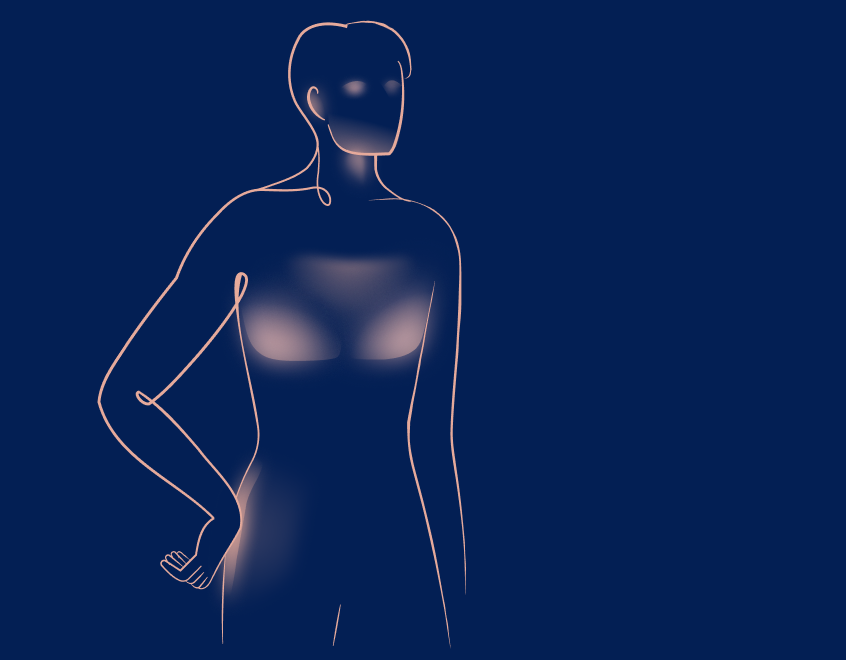
Aesthetic Surgery
Breast Surgery

- 12 breast implant procedures
Gender-Affirming Procedures
- 4 chest masculinization surgeries
- 3 laryngeal prominence reductions (first assistant)
- 2 Brazilian Butt Lift procedures
- 3 facial feminization surgeries (first assistant)
Head and Neck Procedures
- 12 blepharoplasties
- 5 otoplasties
- 9 cervico-facial lifts (first assistant)
i. deep-plane facelift
ii. SMAS plicature facelift
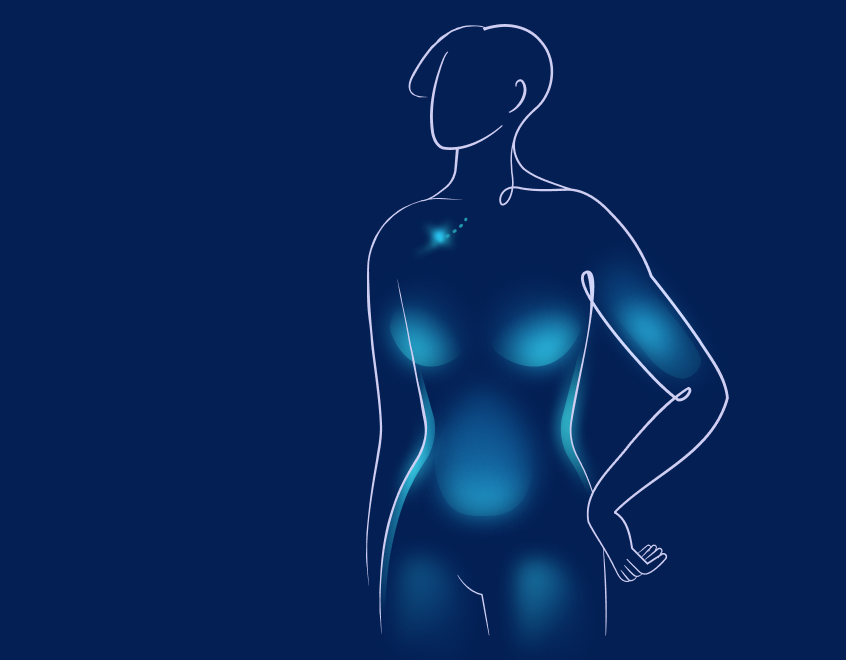
Reconstructive Surgery
Cutaneous & Minor Surgery
- 180 excisions of benign and malignant skin tumors
- 100 cyst removals (including scalp lesions)
- 40 lipoma excisions
- 26 melanoma re-excisions
- 40 scar revisions
- 16 local flap reconstructions
- 10 minor hand surgeries
Breast Surgery
- 84 breast reductions
- 48 post-mastectomy reconstructions using lipofilling
- 101 breast lipofilling procedures
- 20 prosthetic breast reconstructions
- 26 sentinel lymph node biopsies
Body Contouring & Post-Bariatric Surgery
- 27 abdominoplasties
- 15 thigh lifts
- 9 arm lifts
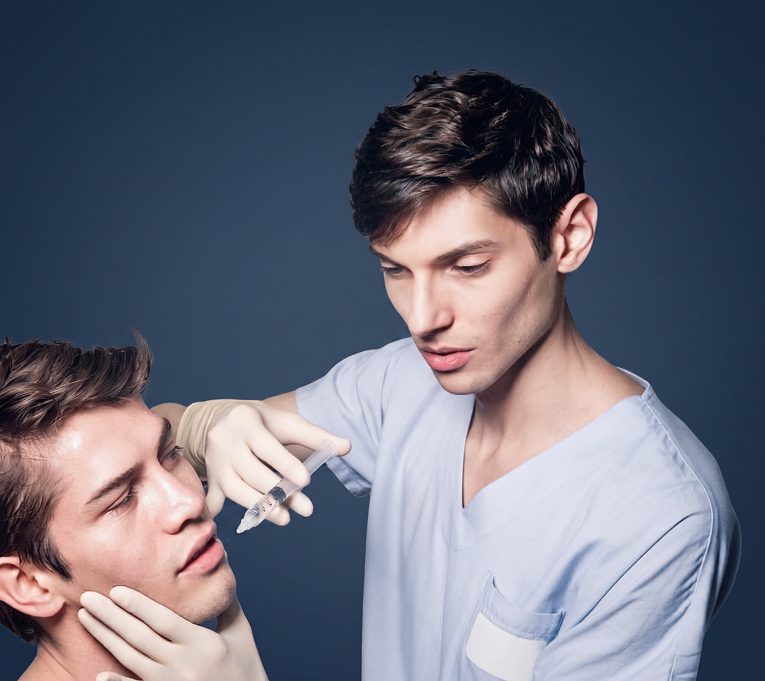
Aesthetic Medicine
Botulinum toxin type A

Hyaluronic acid fillers
Skin quality and regenerative protocols
- Polynucleotides - purified salmon-derived DNA
- Medical chemical peels - exfoliation and transdermal biorevitalization
- Polyrevitalizing complex - non-cross-linked HA combined with other skin nutrients
- Hybrid cooperative HA complexes - tissue bio-remodeling
- Poly-L-lactic acid biostimulator - collagen stimulator
Laser resurfacing and medical laser treatments
- CO2 - skin resurfacing, scar revision, and deep dermal remodeling
- Nd:YAG (1064 nm) - vascular lesions, deep dermal heating, and pigment management
- Er:YAG (2940 nm) - skin rejuvenation & precision epidermal ablation
- Fractional Microneedling Radiofrequency (RF) - Subdermal adipose remodeling and skin tightening
- Dual-wavelength Er:YAG & Nd:YAG Laser platform - non-ablative tightening, resurfacing, and intraoral/perioral rejuvenation
- Picosecond Nd:YAG Laser (1064/532 nm) - photoacoustic pigment fragmentation and tattoo/melasma treatment
- Cryolipolysis - Controlled cooling for localized fat reduction
- Interstitial Diode Laser (1470 nm) - minimally invasive fiber-optic lipolysis and skin retraction
- Near-Infrared (IR) thermolifting & hydro-exfoliation - deep dermal collagen contraction via water-filtered infrared light
- Non-ablative Fractional Diode Laser (1470 nm) - sub-surface thermal micro-columns for texture and tone improvement
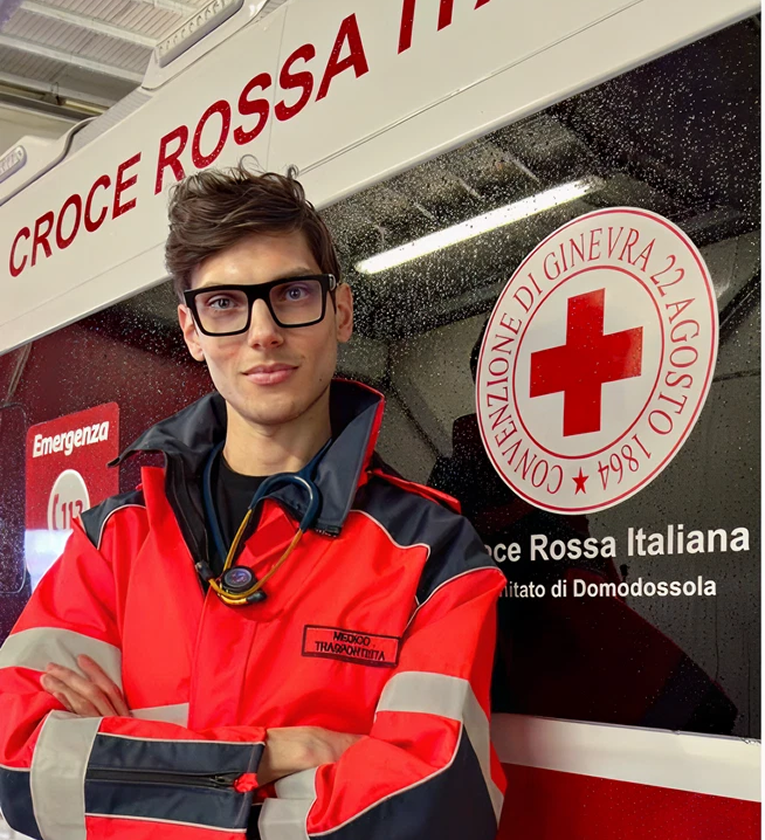
Clinical Medicine & Emergency Care
Ongoing practice in acute medical environments ensuring safety-driven decision making during life-threatening conditions — including acute myocardial infarctions, strokes, sepsis, respiratory crises, severe allergic reactions, and trauma.
Google Reviews
Patients’ experiences often reflect more than any description - they offer a genuine insight into Dr Uderzo's philosophy, his approach, and the way he cares.
Dr Stefano is very, very attentive and very precise in his technique. Everything he does, he does with the utmost care and ensuring you are beyond satisfied with the result the whole way through the process. Would recommend 10/10.
Very welcoming and puts you at ease. Clear description of the intervention to come and the next steps. Overall excellent interaction!
The doctor is kind, professional, and friendly, and has a smile. I went to the emergency room for a wasp sting. Very satisfied.
Frequently Asked Questions
Because being informed the right way leads to more authentic results.
Search for relevant FAQs
How do you avoid the "pulled" look after a facelift?

The pulled look comes from three mistakes: pulling on the skin instead of the deep tissues, pulling in the wrong direction, and failing to address lost volume. As we age, the face does not only descend but also deflates: lifting a deflated face makes it look tight and unnatural. This is why many surgeons combine the facelift with fat transfer. In the "lift-and-fill" facelift described by Rod Rohrich and colleagues in 100 patients, SMAS repositioning along individual vectors was combined with fat grafting into the deep fat compartments of the cheek and the nasolabial fold: the fold improved by at least one grade in 81% of cases. The goal is to look like yourself a few years ago, not like someone else.
Source: Rohrich RJ et al. Plastic and Reconstructive Surgery, 2014 — doi:10.1097/01.prs.0000436817.96214.7e
What are the risks of a facelift?
In an analysis of 11,300 facelifts, major complications occurred in 1.8%, in line with other cosmetic operations. The most frequent is haematoma (1.1%), a collection of blood under the skin that must be drained promptly; infections follow (0.3%). The risk of haematoma was almost four times higher in men, and combined procedures raised the overall risk, up to 3.7% compared with 1.5% for a facelift alone. Less often, changes in sensation or facial movement can occur, usually temporary. Blood-pressure control, stopping smoking and suspending medicines that increase bleeding are the most important preventive measures.
Source: Gupta V et al. Aesthetic Surgery Journal, 2016 — doi:10.1093/asj/sjv162
Deep plane, SMAS or mini facelift: what is the difference?
The techniques differ in the layer that is worked on. A skin-only lift pulls the skin: results are short-lived with a "pulled" look, and it is now outdated. The SMAS facelift acts on the muscle-and-fascia layer that lies beneath the fat, folding (plicating) or removing a portion of it to reposition the tissues. The deep plane facelift, described by Sam Hamra in 1990 in 403 patients, works beneath the SMAS and releases the ligaments that hold the tissues down, moving the cheeks and neck as a single unit without putting tension on the skin. Mini facelifts, such as the MACS lift, use shorter incisions and suture suspension, often under local anaesthesia, and suit early sagging. The right technique depends on the degree of laxity.
Sources: Hamra ST. Plastic and Reconstructive Surgery, 1990 — PubMed 2359803; Tonnard P et al. Plastic and Reconstructive Surgery, 2002 — doi:10.1097/00006534-200205000-00046
Can rhinoplasty also improve breathing?
Yes, when breathing difficulty is due to correctable anatomical causes: a deviated septum, a narrow or collapsing nasal valve, enlarged turbinates. In these cases it is called septorhinoplasty or functional rhinoplasty, and shape and function can be corrected in the same operation. A systematic review of 25 years of literature concluded that modern techniques are effective for nasal obstruction caused by valve collapse, while noting that most studies are of moderate quality. A principle not to forget: a successful cosmetic result must never make breathing worse. Narrowing the nose too much or weakening its support structures is one of the most common mistakes of purely "cosmetic" rhinoplasty.
Source: Rhee JS et al. Otolaryngology–Head and Neck Surgery, 2008 — doi:10.1016/j.otohns.2008.02.007
How long do swelling and bruising last after rhinoplasty? When will I see the final result?
Bruising and swelling around the eyes are most visible in the first few days and settle within one to two weeks, when the nasal splint is usually removed. Some measures reduce them in a documented way: a meta-analysis of 9 studies involving 312 patients showed that steroids given during surgery reduce eyelid swelling in the first week; another, of 11 studies and 627 patients, documented the benefit of cold compresses and taping, and more bruising when nasal packing is used. Residual swelling of the nose, especially of the tip and in thick skin, resolves slowly instead: the final profile takes many months, often up to about a year.
Sources: Hwang SH et al. The Laryngoscope, 2015 — doi:10.1002/lary.24883; Lee HS et al. European Archives of Oto-Rhino-Laryngology, 2017 — doi:10.1007/s00405-017-4535-6
What is preservation rhinoplasty?
It is an approach that, instead of removing and rebuilding the structures of the nasal bridge, preserves them as much as possible: the hump is lowered by "dropping" the bony and cartilaginous bridge as a single unit, keeping its natural surface intact. Surgeon Rollin Daniel called it "a new rhinoplasty revolution" in the Aesthetic Surgery Journal in 2018, while acknowledging its long historical roots. The expected advantages are a more natural profile and fewer irregularities of the bridge. It is not suitable for every nose: it depends on the shape of the hump, the septum and the goals. It fits a broader principle: correcting the nose without erasing the identity of the face.
Source: Daniel RK. Aesthetic Surgery Journal, 2018 — doi:10.1093/asj/sjx258
Open or closed rhinoplasty: what is the difference?
In closed rhinoplasty all incisions are inside the nostrils; open rhinoplasty adds a small incision across the columella, the strip of skin between the nostrils, which allows the skin to be lifted and the cartilages to be seen directly. The open technique, championed among others by surgeon Jack Gunter, gives greater control in complex cases, on the tip and in revisions; the closed technique avoids an external scar and suits more targeted corrections. The columella scar, when well executed, usually becomes barely visible. There is no single best technique: there is the one best suited to the anatomy of the nose and the result to be achieved.
Source: Gunter JP. Plastic and Reconstructive Surgery, 1997 — doi:10.1097/00006534-199703000-00040
How much fat can safely be removed with liposuction?
There is no single number for everyone: the limit depends on weight, health, type of anaesthesia and the facility. As a general rule, large volumes increase the risks related to fluid balance and blood clots and require monitoring in a hospital setting. Data on 31,010 liposuction procedures show that liposuction alone has a major complication rate of 0.7%; the risk was almost five times higher when combined with other operations, and it increases with age and body mass index. The message is clear: liposuction is safe when it is proportionate to the patient. Removing more fat in a single session does not mean a better result, but often more risk and more irregularities.
Source: Kaoutzanis C et al. Aesthetic Surgery Journal, 2017 — doi:10.1093/asj/sjw243
What types of liposuction are there? Will my skin tighten?
Almost all modern liposuction uses the tumescent technique: first a solution containing local anaesthetic and adrenaline is infiltrated to reduce bleeding and pain. Then fat is suctioned through thin cannulas, by hand or with assisted devices (power-assisted, ultrasound such as VASER, laser), which make work on fibrous areas easier but do not by themselves change the result. More than the technology, what counts is pre-operative assessment, safe anaesthetic doses, fluid management and precision in sculpting: this is the conclusion of an evidence-based review in Plastic and Reconstructive Surgery. Skin retracts well when it is elastic; when it is already loose, removing fat can make it look worse and a skin-removal procedure needs to be added.
Source: Chia CT et al. Plastic and Reconstructive Surgery, 2017 — doi:10.1097/PRS.0000000000002859
Does fat come back after liposuction?
The fat cells removed do not grow back in the treated area, but the body tends to defend its total amount of fat. In a randomised trial in women without obesity, one year after liposuction the percentage of body fat had returned to close to its starting level: the treated thighs stayed slimmer, but fat had re-accumulated in the abdomen. This does not make liposuction pointless, but it explains why the result also depends on you: a stable weight and an active lifestyle protect the new shape. With significant weight gain, fat settles in untreated areas and can create disproportions.
Source: Hernandez TL et al. Obesity, 2011 — doi:10.1038/oby.2011.64
Does liposuction make you lose weight?
No, and the clearest evidence comes from a study published in the New England Journal of Medicine. In women with obesity, large-volume abdominal liposuction removed on average 9–10 kg of fat, but at 10–12 weeks it had not improved insulin sensitivity or cardiovascular risk factors: blood pressure, blood sugar, cholesterol and inflammatory markers were unchanged. Subcutaneous fat removed surgically does not bring the metabolic benefits of weight loss achieved through diet and exercise. Liposuction is a contouring tool: it corrects localised fat deposits that resist diet and exercise — flanks, abdomen, thighs, knees, under the chin — in people close to their ideal weight.
Source: Klein S et al. New England Journal of Medicine, 2004 — doi:10.1056/NEJMoa033179
After major weight loss (bariatric surgery or medication): abdomen, arms, thighs?
After major weight loss — through bariatric surgery or, increasingly, medication — the skin cannot shrink back: excess skin remains on the abdomen, arms, thighs, breasts and back, causing irritation, hygiene difficulties and discomfort. Body contouring surgery removes it: tummy tuck or panniculectomy, arm lift (brachioplasty) and thigh lift, breast lift. Planning uses classifications such as the Pittsburgh Rating Scale, which grades ten body regions on four levels of severity and helps set priorities and the order of operations. The scars are long, and this trade-off must be discussed openly. Prerequisites: a weight that has been stable for several months and good nutritional status.
Source: Song AY et al. Plastic and Reconstructive Surgery, 2005 — doi:10.1097/01.prs.0000182606.92069.13